Our science-backed system redesigns how you build habits — so diet, exercise, and more finally stick.
Think about it: You can hit deadlines and hold everyone else's life together—but can't stick to a simple eating plan?
That's not a willpower problem.
It’s more likely this:
Solvable frictions draining your decision‑making
Low momentum due to chronic low-grade stress
Low structure causing missed cues and forgetting.
With a 3-Step Habit Makeover Method
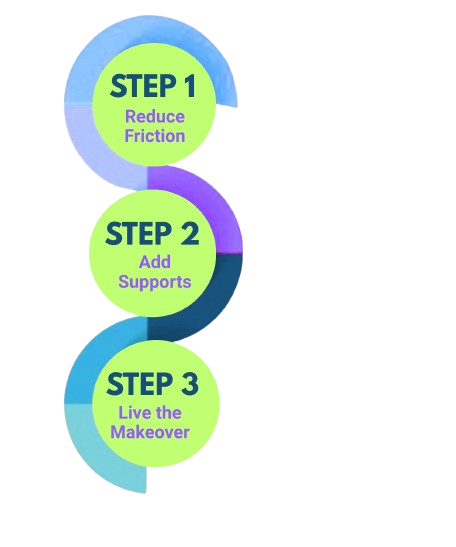
☑️3-Step method
☑️ Science-backed ease
☑️ Environment redesign
☑️ Emotional care
☑️ Habit-sticking tools
☑️ Habit Makeover Club - see below
The Habit Makeover Club
Stop reading about consistency. Start practicing it.
☑️ Weekly Assignments
Train in hacks like habit-stacking.
☑️ Behavioral Science
Use biological rhythms, cues, and proven science — not willpower.
☑️ Strategic Pathway
A 3-step method that rewires habits into automatic behaviors.
☑️ Gentle Momentum
Music, creativity, and satisfying switches over forced motivation.
☑️ Real Coaching
Live guidance from a person, not a chatbot or app.
What We Do
Moving from New York City—where healthy habits (walking, farmers' markets, free outdoor yoga) were a natural part of city life—to a city built very differently taught me something important: Healthy habits aren't just about discipline. They're shaped by the conditions around us.
I built The Habit Club to help people "Queer Eye" their lives — putting the right cues and rhythms in place to make healthy habits happen more naturally.

Join high-achieving professionals and neurodivergent thinkers who are finally finding peace in their routines. No more struggling. No more willpower battles.
✔ Personal‑style coaching community
✔ Click and play real life assignments
✔ Powerful habit tools like visual cues
✔ Access to four healthy habit groups
✔ Easy group coaching and support
No credit card required • Cancel anytime